Labrix
CZEN

On the origin of our name

Labrys
and labyrinth

The story of an ancient symbol that gave Labrix both its name and its shape.

The symbol that gave rise to our name

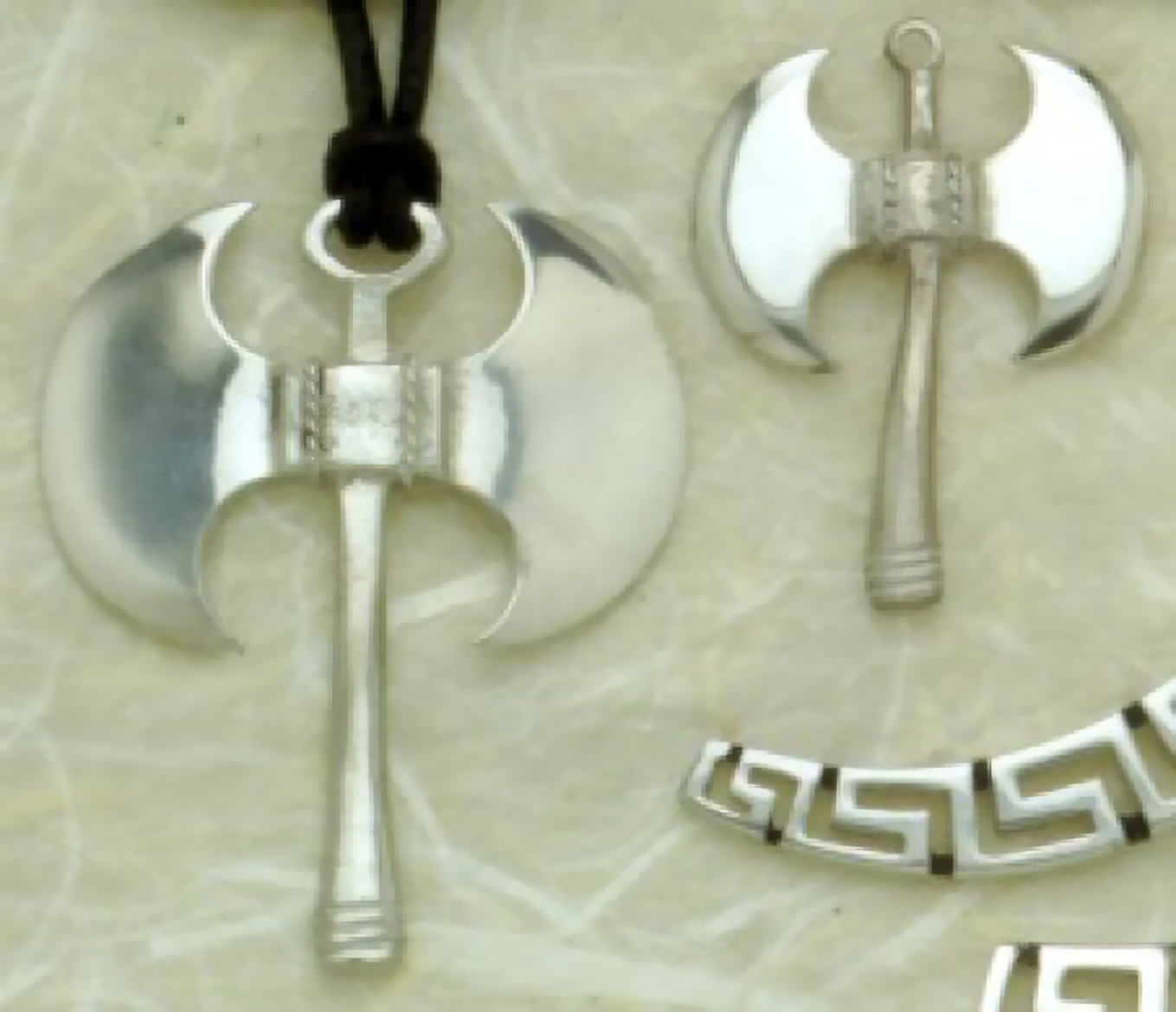
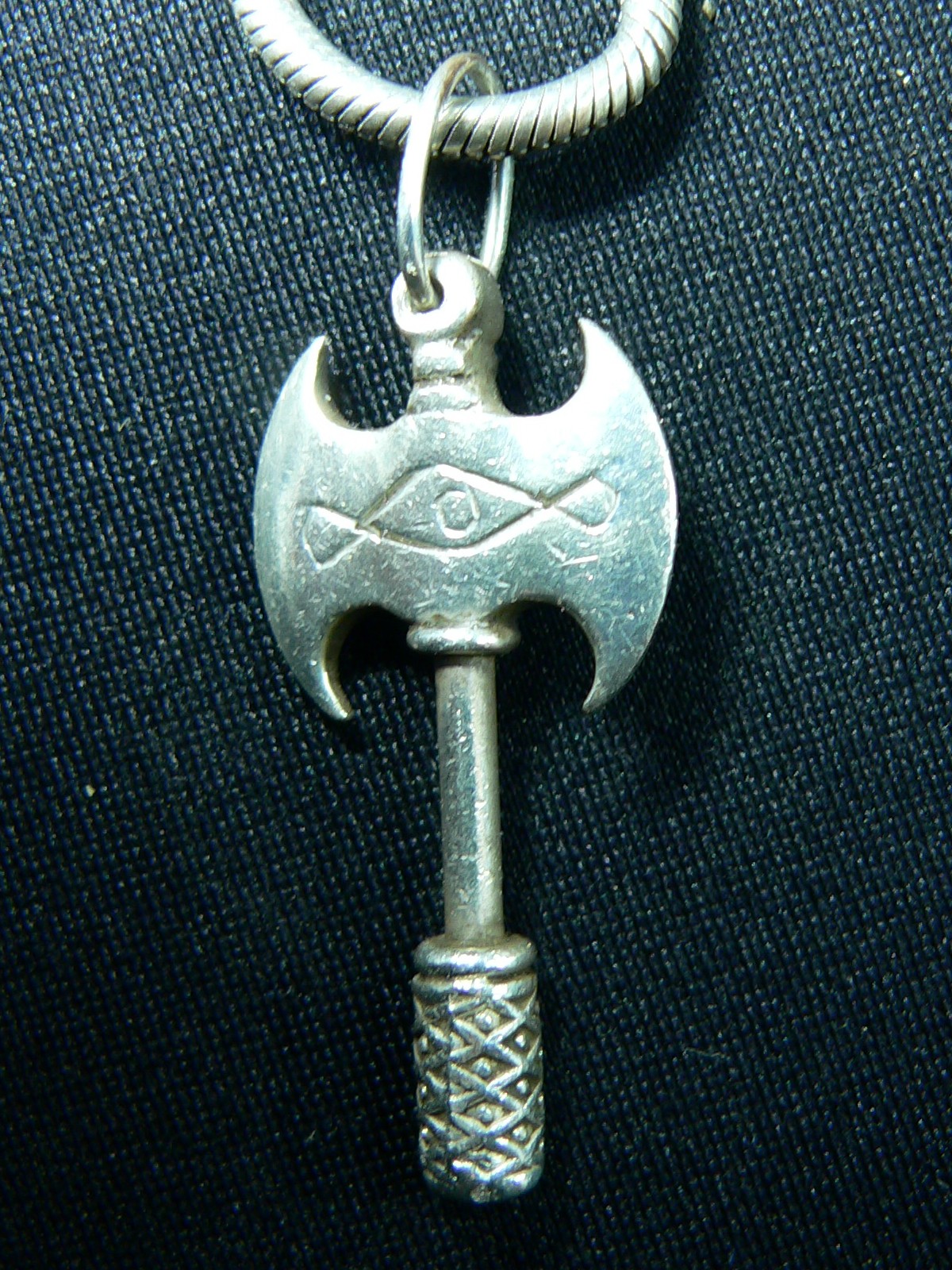
In many myths and legends the double-headed axe — labris, also labrys or labyris — is connected with the labyrinth. As an ancient protective symbol of Crete and other island cultures of the Greek world, this axe was always associated with the highest gods. It could also be represented by a pair of horns, one pointing up and the other down, which together formed a double-headed axe linked to the sacred bull traditionally worshipped on Crete.

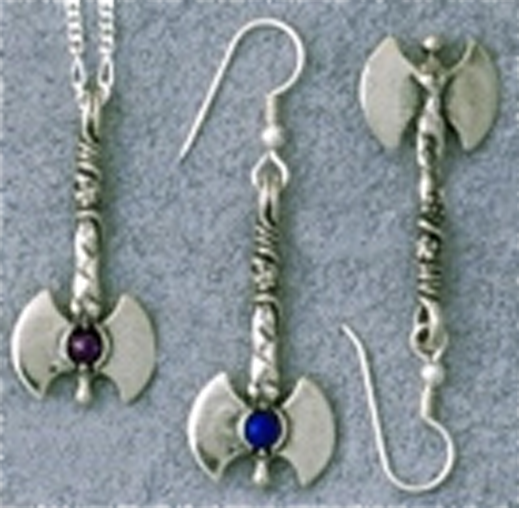
Jewellery bearing the double-axe motif, most of it silver, is still made across the Mediterranean today. One such piece was exactly what inspired the name and the logo of our publishing house, Labrix.

A protective symbol of Minoan Crete

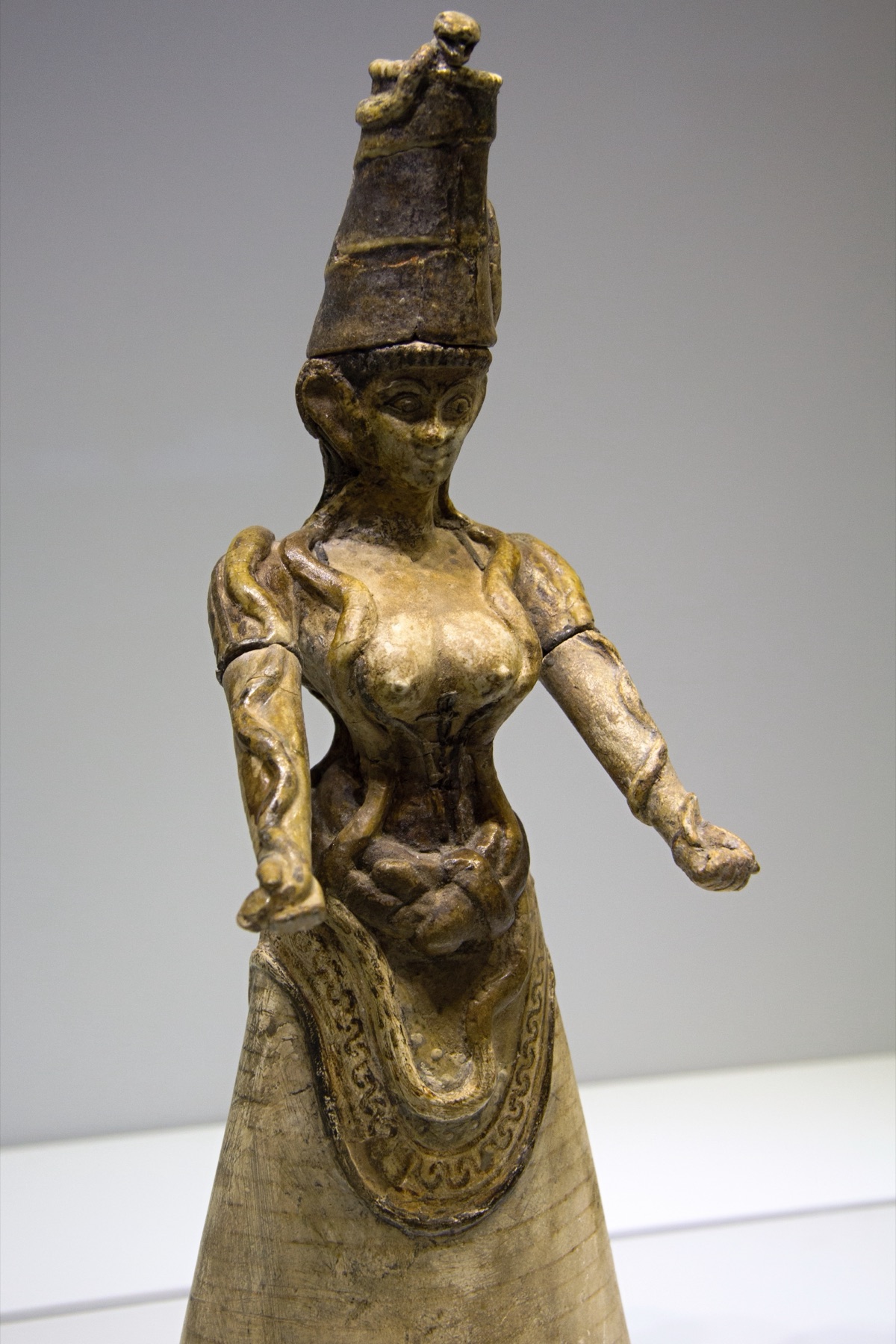
According to ancient sources, the labrys was above all a symbol of the original Cretan culture known as Minoan. This very rich and advanced civilisation, whose origins lie between 3000 and 2000 BC, was among the few in which the cult of the Great Snake Goddess survived for a long time and in which men and women held equal standing.

Judging from surviving artefacts, which favour natural rather than martial motifs, it was a peaceful civilisation with a strong cult of the dead, its own still-undeciphered script, and highly advanced, practical architecture. Natural disasters repeatedly disrupted its history. Many scholars believe this sophisticated Mediterranean culture gave rise to the myth of legendary Atlantis.

The labrys was an attribute of the Great Goddess and a symbol of fertility and abundance; by extension it became a symbol of protection against evil powers and negative energy. Later, in the hands of the Amazons, it stood for independence, freedom and equality between men and women.

The link between labrys and labyrinth appears in several independent myths. In one of them, double-headed axes mounted on staffs were used as protective objects in the dance ceremonies of priestesses consecrated to the Great Goddess. Later the labrys motif became a paving pattern in the places where those dances were held. From this the idea of the labyrinth may have grown — first as a principle of symmetrical repetition of a single pattern, and later as a maze.

The journey to the centre of the story

The myth of the labyrinth is ancient and common to all early civilisations, which understood the labyrinth as a difficult, tangled stretch of a journey in which a person becomes lost and cannot find the way out. It is often bound up with a hero or mythical figure able to pass through the labyrinth, find the key and solve the riddle that reveals the right path.

Daedalus's labyrinth

Another well-known legend holds that the first extraordinary labyrinth was built by Daedalus, the celebrated and inventive Cretan architect. It is said that it was not in fact an underground structure, dark and winding, but a complex of houses, palaces and gardens laid out so that whoever entered could not find the way out.

Daedalus built the labyrinth for Minos, king of Crete. It was Minos's wife Pasiphaë, however, who set in motion the events that turned the labyrinth into a nightmare.

Minos and the white bull

To become king, Minos needed the help of Poseidon, the mighty god of the oceans and waters. Poseidon created a white bull, which rose out of the sea and was given as a gift to the kings of the Cretan islands. Receiving it won Minos the respect he needed and allowed him truly to become king.

Pasiphaë, however, fell in love with the white bull and asked Daedalus to make an enormous bronze cow that would attract it.

The birth of the Minotaur

Daedalus made the cow, and Pasiphaë hid inside it. From this strange union came a terrible creature — half bull, half man — the Minotaur. The monster came to inhabit the labyrinth, which from then on became a dark, haunted and fearsome place.

Every nine years, seven young men and seven maidens had to be sacrificed to the Minotaur.

Theseus and Ariadne's thread

When the sacrifice was to be made for the third time, the Athenian hero Theseus appeared. Ariadne, daughter of Minos, fell in love with him and advised him to unwind a thread as he went through the labyrinth, so that after killing the Minotaur he could find his way back.

According to the oldest myths and the drawings preserved on ancient vessels, Theseus killed the Minotaur with a double-headed axe. The hero finds his way back through the labyrinth only after reaching its centre and working a wonder with the labrys.

“The labrys can be a symbol of the butterfly — of transformation and renewal.”

The meaning of the double-headed axe was almost always symbolic